
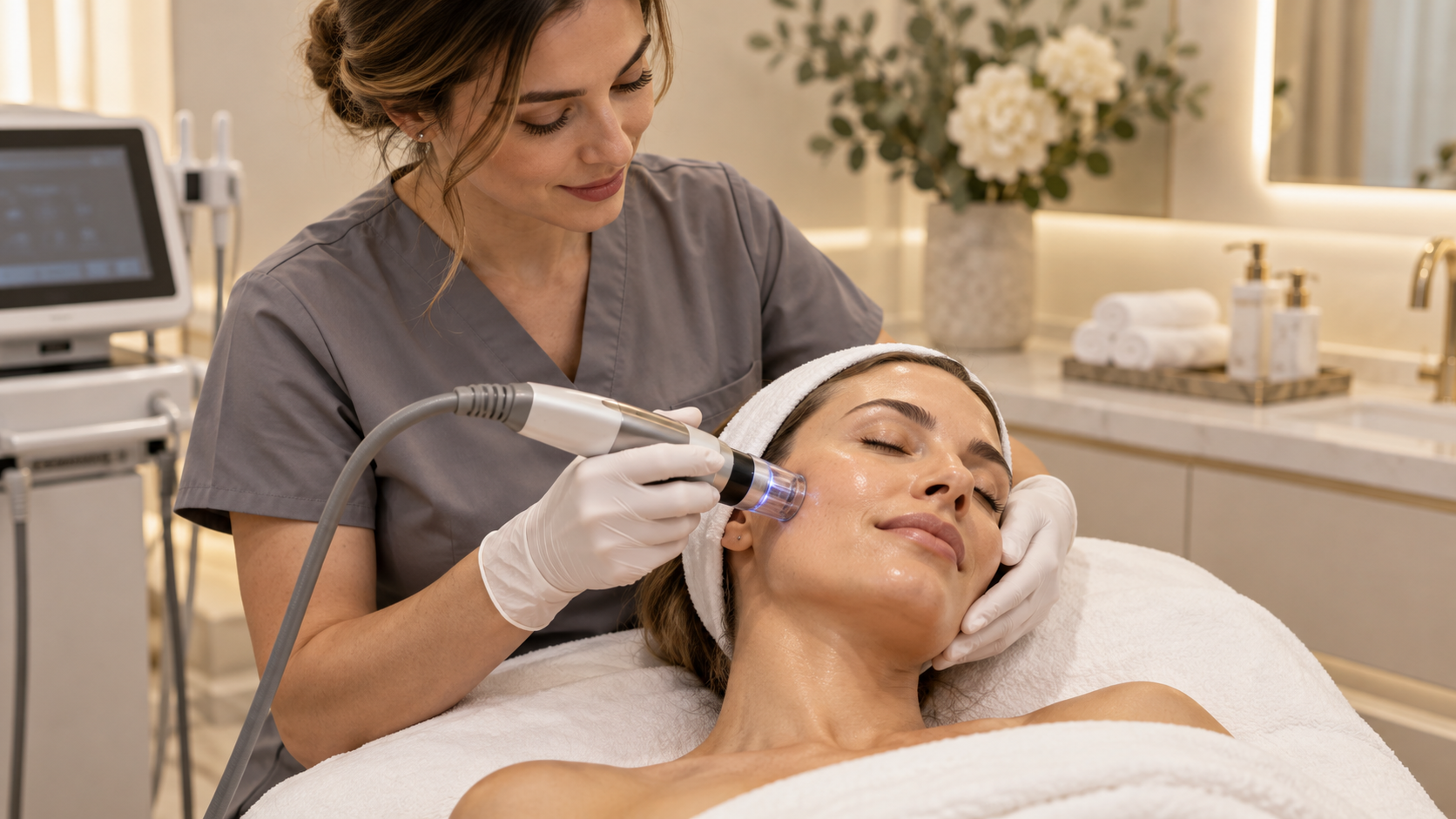
RF microneedling combines very small needles with radiofrequency energy delivered into the skin. The controlled mechanical and thermal injury can stimulate a wound healing response and may improve selected concerns such as acne scars, uneven texture, wrinkles, and mild skin laxity. Recent systematic reviews support potential benefit across several dermatologic and aesthetic applications, although treatment methods and study quality vary. [2]
RF microneedling is also a medical procedure with meaningful risks. In October 2025, the United States Food and Drug Administration reported serious complications associated with certain uses of RF microneedling devices, including burns, scarring, fat loss, disfigurement, and nerve damage. [1]
That balance matters. RF microneedling can be a useful option for selected patients, but it should not be described as risk free, appropriate for everyone, or simply a stronger version of a facial.
At Vanished Aesthetics & Wellness in Bloomington, Indiana, RF microneedling is part of the clinic’s current skin treatment offerings. A consultation is needed to determine whether this category of treatment fits your skin, medical history, priorities, and tolerance for recovery.
What Is RF Microneedling?
Traditional microneedling uses fine needles to create controlled microscopic channels in the skin. RF microneedling adds radiofrequency energy.
During RF microneedling, needles enter the tissue and deliver controlled heat at selected depths. The combination creates both mechanical injury from the needles and thermal injury from radiofrequency energy.
The healing response can influence collagen and other components of the skin structure over time. This is why RF microneedling is often considered for concerns involving texture, scars, wrinkles, and mild laxity.
It is important to understand that the category includes different devices and treatment approaches. Needle depth, energy, pulse duration, treatment density, tissue thickness, overlap, and provider technique may all affect both results and risk.
The FDA specifically describes RF microneedling as a medical procedure rather than a simple cosmetic treatment. [1]
What Can RF Microneedling Help With?
Research has examined RF microneedling for several concerns.
A 2026 systematic review that included 41 studies found evidence supporting improvement in conditions including atrophic acne scars and selected signs of skin aging. However, protocols differed substantially between studies, including differences in treatment parameters. [2]
For people researching RF microneedling primarily because of acne scars, the evidence is particularly relevant. A 2025 systematic review of 16 studies involving 481 participants concluded that fractional RF microneedling appears likely to be effective for facial acne scarring, while also emphasizing the need for additional randomized trials to establish optimal treatment parameters. [3]
Potential goals may therefore include:
- Improving the appearance of selected acne scars
- Improving uneven skin texture
- Softening the appearance of some wrinkles
- Addressing selected areas of mild skin laxity
- Supporting gradual skin remodeling
These are potential treatment goals, not guaranteed outcomes.
RF microneedling also does not remove substantial excess skin and should not be presented as equivalent to a surgical lift.
How Does RF Microneedling Work?
The treatment creates controlled injury in two ways.
First, the needles mechanically enter the skin.
Second, radiofrequency energy produces heat within selected tissue.
The body responds to that controlled injury through its normal healing process. Research suggests this process can contribute to changes in collagen organization and skin structure over time. [2]
The word controlled is important. More heat, greater depth, or more aggressive treatment does not automatically mean a better outcome.
Treatment parameters must account for the area being treated, tissue thickness, skin characteristics, device design, treatment goal, and individual risk factors.
This is one reason comparing RF microneedling solely by brand name can be misleading. The device matters, but treatment planning and technique also matter.
Who Might Consider RF Microneedling?
Someone may discuss RF microneedling with a qualified provider if they are concerned about acne scarring, uneven texture, wrinkles, or mild laxity and understand that improvement is gradual and variable.
A consultation is especially important because an online article cannot determine candidacy.
Medical review may be needed when there is active skin infection, impaired healing, altered sensation, a history of abnormal scarring, bleeding concerns, implanted electronic equipment, metal in the proposed treatment area, prior radiation, pregnancy, or concern about unwanted facial volume change.
Recent treatments and current medications may also affect planning.
The appropriate provider should review medical history, medications, skin characteristics, treatment history, anatomy, goals, and alternatives before recommending a procedure.
What Does RF Microneedling Feel Like?
The experience varies according to the device, area, settings, and individual sensitivity.
Numbing may be used, but discomfort can still occur. Describing RF microneedling as painless would not be accurate.
Temporary effects may include redness, swelling, tenderness, small crusts, bruising, visible treatment patterns, tightness, and sensitivity.
Some people experience relatively limited disruption to daily activities, while others may need more recovery time. The intensity of treatment is an important factor.
For that reason, there is no responsible universal promise of zero downtime.
When Do Results Appear?
RF microneedling is generally a remodeling treatment rather than an instant transformation.
Some temporary changes can be visible early because of swelling or hydration, but structural skin remodeling develops gradually.
Research evaluating facial rejuvenation and acne scarring typically assesses improvement over weeks or months rather than immediately after treatment. [2][3]
The number of treatments needed cannot responsibly be predicted for every person in a blog article. Treatment frequency and total sessions depend on the concern, device, treatment intensity, response, skin characteristics, and provider assessment.
What Are the Common Side Effects?
Temporary effects reported with RF microneedling commonly include redness, swelling, tenderness, and discomfort. [2]
Depending on the treatment, a person may also experience:
- Bruising
- Small crusts
- Temporary treatment marks
- Dryness or tightness
- Temporary pigment changes
- Sensitivity
Not everyone experiences the same recovery.
What Serious Risks Should Patients Know About?
This part deserves particular attention.
On October 15, 2025, the FDA issued a safety communication concerning certain uses of RF microneedling devices. The agency reported awareness of serious complications including burns, scarring, fat loss, disfigurement, and nerve damage. Some reported injuries required medical intervention or surgical repair. [1]
The FDA advised people considering treatment to discuss benefits and risks with a licensed health care provider who has training and experience using RF microneedling devices. [1]
The communication does not mean that every patient will experience a serious complication. It does mean that RF microneedling should not be marketed as harmless or universally safe.
Potential complications can include:
- Burns
- Scarring
- Infection
- Unwanted pigment change
- Fat loss
- Nerve injury
- Persistent pain or altered sensation
- An unsatisfactory cosmetic outcome
Anyone with concerning symptoms after treatment should contact the treating provider. Severe burns, rapidly worsening pain, spreading redness, pus, fever, black tissue, new weakness or numbness, eye symptoms, or severe swelling require urgent medical assessment.
Can RF Microneedling Cause Facial Fat Loss?
The possibility should not be dismissed.
The FDA safety communication specifically includes fat loss among the serious complications reported with certain RF microneedling uses. [1]
That does not establish that every treatment causes fat loss, nor does it provide a simple probability for an individual patient.
It does mean that people who are concerned about facial volume should discuss treatment depth, treatment area, device selection, technique, and alternatives with their provider before proceeding.
Promises that RF microneedling cannot affect facial fat are not consistent with the current FDA safety communication.
RF Microneedling Versus Traditional Microneedling
Traditional microneedling and RF microneedling share one major feature: both use needles to create controlled injury.
The difference is heat.
Traditional microneedling creates mechanical micro injuries without intentionally delivering radiofrequency heat into the tissue.
RF microneedling combines mechanical needling with thermal energy.
Because RF microneedling introduces another energy source, it can provide different treatment possibilities, but it also introduces different risk considerations.
Traditional microneedling may be considered for selected concerns such as acne scars and texture. RF microneedling may be considered when the treatment plan calls for both needling and controlled thermal injury.
Neither is automatically better.
The more useful question is which mechanism and risk profile make sense for the concern being treated.
You can review Vanished Aesthetics & Wellness skin treatment options in Bloomington when comparing these categories.
RF Microneedling Versus Fractional CO2 Laser
RF microneedling and fractional carbon dioxide laser resurfacing both create controlled injury, but they do it differently.
RF microneedling places needles into tissue and delivers radiofrequency heat.
Fractional CO2 laser uses laser energy that is strongly absorbed by water to create microscopic areas of ablation and thermal injury.
A 2026 systematic review comparing microneedling radiofrequency approaches with fractional laser treatments for atrophic acne scars found that RF based protocols could improve acne scars and might offer recovery or tolerability advantages in selected patients. The available evidence did not establish that RF microneedling is uniformly superior to fractional laser treatment. [4]
A separate randomized split face study published in 2026 also found meaningful improvement with both RF microneedling and fractional CO2 laser for facial atrophic acne scars, without a significant difference in the primary scar score between treatments in that study. [5]
The practical choice can depend on scar type, pigmentation risk, desired intensity, expected recovery, previous treatments, skin characteristics, and provider assessment.
Vanished also lists fractional CO2 resurfacing among its current advanced skin treatment options, making this a useful comparison to discuss during consultation.
Is RF Microneedling Safe for Every Skin Tone?
No treatment should be described as universally safe for every skin tone.
Studies have included people across different Fitzpatrick skin types, and systematic reviews report generally favorable outcomes in appropriately selected patients. [2] However, pigment changes remain possible, and individual risk depends on skin characteristics, inflammation history, device parameters, treatment depth, energy, and technique.
People with a history of post inflammatory hyperpigmentation should specifically discuss pigment risk before treatment.
Safety should be individualized rather than reduced to a broad marketing statement.
What Should You Ask Before RF Microneedling?
A useful consultation is not simply about whether the clinic offers the treatment.
Consider asking:
- Which RF microneedling device would be used?
- Why is this treatment being recommended for my concern?
- What alternatives could address the same goal?
- What type of recovery is realistic for the planned treatment intensity?
- What common side effects should I expect?
- What serious complications should I know about?
- How does my skin type or medical history change the risk?
- What should I do if I develop a concerning symptom after treatment?
- How does RF microneedling compare with traditional microneedling or fractional laser resurfacing for my particular concern?
These questions make the conversation more specific than asking whether RF microneedling is simply good or bad.
Benefits and Limitations at a Glance
Potential benefits include improvement in selected acne scars, texture, wrinkles, and mild skin laxity. Research is supportive for several applications, although protocols vary. [2][3]
Limitations include variable outcomes, a gradual response, potential need for multiple treatments, temporary downtime, and the possibility of both common side effects and serious complications.
RF microneedling cannot guarantee a particular percentage of improvement.
It does not replace surgery when substantial skin removal or structural lifting is needed.
It is also not automatically preferable to traditional microneedling, laser resurfacing, or other procedures.
Frequently Asked Questions
Is RF microneedling the same as Morpheus8?
Morpheus8 is one RF microneedling technology. RF microneedling is the broader treatment category. Devices can differ in needle design, depth options, energy delivery, and authorized uses.
Does RF microneedling tighten skin?
Research has reported improvement in selected measures of skin laxity and facial rejuvenation, but the amount of change varies. [2] It should not be described as equivalent to surgical skin removal or a surgical facelift.
Is RF microneedling good for acne scars?
Evidence suggests RF microneedling may improve selected atrophic acne scars. [3][4] Scar type and severity matter, and some patients may be better served by another treatment or a combination approach.
How much downtime does RF microneedling have?
Recovery varies by device, treatment intensity, area, and individual healing. Redness, swelling, tenderness, crusting, bruising, and temporary treatment marks can occur. A universal promise of zero downtime is not appropriate.
Is RF microneedling painful?
Discomfort varies. Numbing may reduce discomfort, but RF microneedling should not be described as painless.
Can RF microneedling cause fat loss?
The FDA has received reports that include fat loss following certain uses of RF microneedling devices. [1] The individual risk cannot be determined from that communication alone, so people concerned about facial volume should discuss treatment depth, area, device, and alternatives with their provider.
Is RF microneedling FDA approved?
That wording is generally incorrect for a device. Medical devices may receive FDA clearance or another form of authorization for specific intended uses. Regulatory status should be checked for the exact device and indication rather than assuming the entire RF microneedling category is FDA approved.
Is RF microneedling better than CO2 laser?
Not universally. Both approaches can improve selected acne scars, and comparative evidence does not establish that RF microneedling is consistently superior to all fractional laser treatments. [4][5] Recovery expectations, scar characteristics, skin type, pigment risk, and treatment goals can influence the decision.
Considering RF Microneedling in Bloomington?
RF microneedling can be worth discussing if your goal involves acne scars, texture, wrinkles, or mild laxity, but the decision should involve more than treatment popularity.
At Vanished Aesthetics & Wellness in Bloomington, Indiana, a consultation can help clarify the concern being treated, realistic expectations, recovery considerations, alternatives, and individualized risks.
Explore the clinic’s skin treatment services or contact Vanished Aesthetics & Wellness to confirm current availability and arrange an individualized assessment.
Suggested Internal Links
- Link RF microneedling to the Vanished skin treatments page.
- Link traditional microneedling to the same skin treatments resource or a dedicated microneedling article when published.
- Link fractional CO2 resurfacing to the skin treatments page and a future CO2 laser educational article.
- Build a future supporting article titled Microneedling Versus RF Microneedling: Which Questions Matter Most?
- Build a second supporting article titled RF Microneedling Versus CO2 Laser for Acne Scars and Texture
- Build a safety focused supporting article titled What to Ask Before an Energy Based Skin Treatment
Claim Verification Table
Claim 1: Vanished currently lists RF microneedling among its skin treatment services.
Status: Verified
Basis: Current Vanished website and July 2026 internal knowledge base.
Publishing note: Confirm availability immediately before publication.
Claim 2: RF microneedling combines needle penetration with radiofrequency heat.
Status: Verified
Basis: FDA safety communication and published reviews.
Publishing note: Appropriate for educational explanation.
Claim 3: RF microneedling may improve selected acne scars, texture, wrinkles, and mild laxity.
Status: Verified with qualification
Basis: Recent systematic reviews.
Publishing note: Retain words such as may, selected, and variable.
Claim 4: RF microneedling has zero downtime.
Status: Unsupported
Correction: Temporary redness, swelling, tenderness, crusting, bruising, and other recovery effects can occur.
Claim 5: RF microneedling is safe for everyone.
Status: Unsupported
Correction: Candidacy and risk require individualized medical and skin assessment.
Claim 6: RF microneedling cannot cause facial fat loss.
Status: Outdated or unsupported
Correction: FDA reports include fat loss among serious complications associated with certain uses. [1]
Claim 7: RF microneedling is FDA approved.
Status: Needs qualification
Correction: Device terminology should use the exact FDA regulatory status for the specific device and intended use.
Claim 8: RF microneedling is superior to CO2 laser for acne scars.
Status: Unsupported as a general statement
Correction: Current comparative evidence supports both modalities but does not establish universal superiority of RF microneedling. [4][5]
Claim 9: A fixed number of treatments will produce a predictable improvement.
Status: Unsupported
Correction: Treatment number and response vary and require provider assessment.